
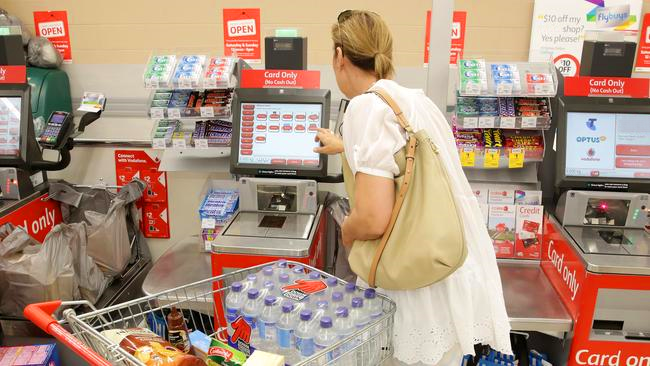
Self-checkouts were introduced to make shopping faster, easier, and more efficient.
At least, that’s the theory.
The reality is a system that can process hundreds of products a day while occasionally struggling to identify a loaf of bread.
The self-checkout is designed to remove the need for human interaction during the checkout process. Customers scan their own items, pay for their shopping, and leave.
When everything works, it’s a remarkably efficient experience.
When it doesn’t, a member of staff usually ends up involved anyway.
My Experience
The experience begins with optimism.
I generally choose the self-checkout because it appears to be the quicker option. There are fewer people in the queue, the machine is available, and I have successfully purchased groceries before.
The first few items usually scan without issue.
This creates a dangerous level of confidence.
At some point, an item refuses to cooperate. The barcode is presented correctly. The item is rotated. It is scanned again. Nothing happens.
A third attempt follows.
Then a fourth.
By this stage, I begin to wonder whether the product is recognised by the retail industry at all.
Eventually the item scans, often with no explanation as to why the previous attempts failed.
The machine and I continue as though nothing happened.
The final stage is payment, which introduces a fresh set of possibilities.
On one occasion, I paid for part of my shopping using a collection of loose coins and intended to pay the remaining balance by card.
The card was declined.
This left me in the unusual position of having partially purchased my shopping but not enough to actually leave with it.
A member of staff was required to cancel the transaction and recover my coins from the machine.
I can only assume this happens often enough that there is a procedure.
Highlights
- Usually faster than waiting in a traditional queue
- Provides a sense of independence
- Surprisingly satisfying when every item scans first time
- Allows shopping with minimal conversation
Drawbacks
- Occasionally develops doubts about perfectly normal products
- Requires staff intervention at precisely the moment you were trying to avoid it
- Creates mild pressure when people are waiting behind you
- Has an impressive ability to make simple transactions feel more complicated than necessary
Who Is This For?
- People buying a small number of items
- Those confident in their barcode-scanning abilities
- Anyone prepared to place their trust in a machine that may or may not recognise a banana
Final Verdict
The self-checkout is an excellent idea that spends a surprising amount of time proving otherwise.
When it works, it’s difficult to imagine shopping any other way.
When it doesn’t, it serves as a reminder that even the simplest transaction can become an unexpected group activity.
Scoring
Efficiency: 7/10
Enjoyment: 5/10
Emotional Stability: 4/10
Would Do Again: Yes
Leave a Reply